 IndexWell
INDEXWELL / EN
Restaurant Blog Content: Ideas That Answer Customer Questions
Last publication update: 2026-11-04
The most useful restaurant blog ideas come from questions guests ask before choosing a visit: what to expect from the menu, how the venue handles a request or what a seasonal change means. Start with the restaurant’s real information and link each article to the relevant menu or contact page.
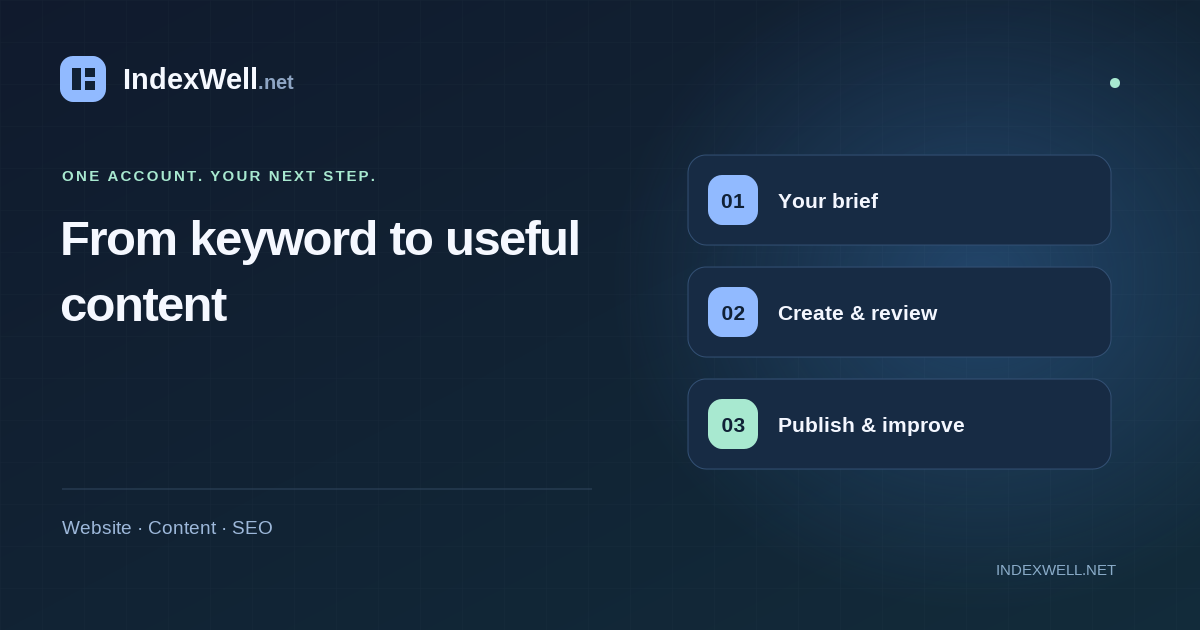
A practical example you can use
Illustrative brief and calculation, not a customer result or performance test.
- Brief
- Audience: restaurant owners. Task: compare menu website options. Supply your real prices, example menu, keywords, sources and requested language.
- Delivery choice
- €1.49 for one article; €3.99 for the HTML choice. Select the output before ordering.
- Publication
- For your hosted site, review the article and publish it under your own /blog/ path. For an external site, take the delivered content to your own editor.
Collect questions before choosing article titles
Ask front-of-house staff, reservation handlers and whoever manages messages to note recurring questions for two weeks. Group them by menu, dietary needs, access, location and occasions. Pick a question only when you can give a specific, dependable answer. For example, “What should a first-time visitor know about our lunch menu?” is more useful than a general post about loving good food.
Prioritize subjects that affect a visit or an order. If callers repeatedly ask whether the entrance has steps, clarify the actual route rather than writing a broad article about accessibility. If the answer changes frequently, put the current fact on the relevant permanent page first; use a blog post only when it adds worthwhile explanation.
Menu posts can explain how a changing menu works, what a set menu includes or how guests can check availability. Dietary posts can describe how requests are handled and who can confirm ingredients or preparation. Access and planning posts can cover the entrance, seating, transport or booking procedure using verified details. For group meals, explain what guests should ask rather than implying every request can be accommodated.
Make menu and dietary articles precise
A strong menu article connects a real decision to concrete information. A chef could explain the ingredients and preparation of a regularly served dish, why it suits a particular meal, and where readers can see the current menu. If an item is seasonal, date the article and say that availability should be confirmed. Avoid turning an old special into an apparently permanent offer.
Dietary articles need careful review. Distinguish an ingredient description from an assurance that a dish is suitable for someone with an allergy. Preparation methods, substitutions and shared equipment may matter. Have the kitchen verify statements before publication, explain the restaurant’s actual process for handling questions, and provide a way to contact staff about a specific visit. Do not make unverified allergen-free claims or treat a blog post as a substitute for an up-to-date menu and direct confirmation.
Write local food articles with a genuine connection
Local food articles work best when the restaurant can add firsthand, relevant detail: a seasonal ingredient it uses, an established supplier relationship it can accurately describe, or practical advice for pairing a visit with a nearby activity. Check facts before naming places or producers, and obtain any permission needed for photographs or quotations. A generic list of neighborhood attractions offers little reason to trust the restaurant as its author.
Keep the visitor’s next step clear. An article about a seasonal dish should point to the current menu; a guide to arriving before an event should point to opening hours, location and reservations. This also makes restaurant website SEO more useful to people: readers can move from an answer to the page that holds the operational details. Google’s SEO Starter Guide describes links as one way crawlers discover pages, but a link is not a promise of search visibility.
A restaurant article brief built around a real decision
Illustrative topic: “Planning a weekday lunch at our café”. The primary query is weekday lunch menu; supporting questions concern opening hours, where the current menu is shown and how to ask about a group visit. This example does not describe an existing customer restaurant.
Use the actual menu and hours as the source material. Explain what guests can check before visiting and link to the maintained Menu page. If group arrangements need confirmation, point to the genuine enquiry route instead of inventing a reservation guarantee. Dietary or allergen details must come from the restaurant’s approved information and review process.
An actionable outline is:
- What a weekday visitor needs to know first.
- Where to find the current menu and prices.
- What to ask before bringing a group.
- How to contact the restaurant for a specific requirement.
That article supports a visit decision. It is different from another generic “best food” list with no connection to the venue.
Publish under the restaurant’s own blog
A standalone IndexWell article costs €1.49; single-page HTML delivery costs €3.99. Choose content for an existing editor if the restaurant already has a blog. There is no requirement to buy hosting just to order a post.
On an IndexWell-created hosted website, review and publish the article under the restaurant domain’s /blog/ route. Keep essential hours, prices and menu details on their primary pages as well; the blog should explain them, not become the only place they can be found.
After publication, check the route to the menu and contact page on a phone. Review the article whenever the menu or arrangements change. Publish another post when there is a distinct verified answer to add, rather than repeating the same lunch topic with slightly different keywords.
How often should a restaurant publish blog posts?
Publish when you have a verified answer or worthwhile update, rather than following an arbitrary schedule. A few maintained posts that help guests make decisions are preferable to frequent articles with stale menus or repeated advice.
Should dietary information live on the blog or the menu?
Keep essential, current menu and dietary information where guests expect to find it. Use a blog post for additional explanation of your actual process, and have staff confirm suitability for a specific request rather than relying on a general article.
Will restaurant blog content make my site appear in Google?
Helpful articles and clear links can make a site easier for visitors and search engines to understand, but publication and submission do not guarantee indexing or rankings. Check that important pages are accessible, connected to relevant site pages and kept accurate.
INDEXWELL
Why choose IndexWell?
IndexWell can keep restaurant pages, the menu and a customer-domain blog in one managed workflow. A standalone article order also works for a restaurant that keeps its current website. Provide the language, keyword and approved restaurant facts; then have someone responsible for the venue review the draft before publication. This creates a practical reason for each post to exist.
Create my article →Sources
INDEXWELL
Turn your next topic into a useful article
Enter your keyword, audience, language and real source material. Review the draft, then download it or add it to your hosted blog. No hosting subscription is required to buy an article.